Local urban planning for climate change adaptation in Chile (PULAC): Integrated risk analysis and resilience tools
Summary
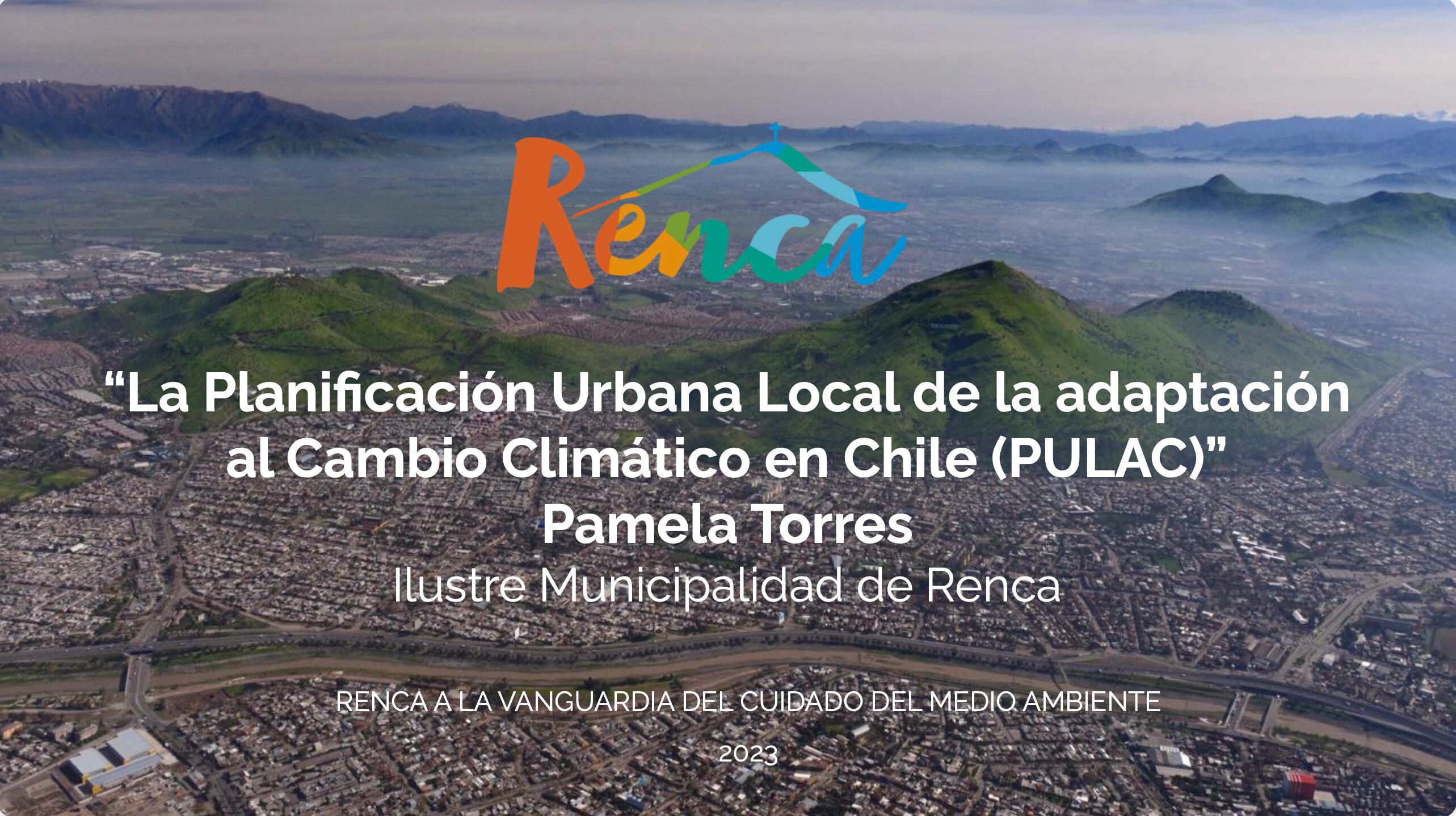
This presentation, delivered by Pamela Torres from the Municipality of Renca, Chile, outlines the application of local urban planning approaches for climate change adaptation under the PULAC initiative. It highlights how municipalities can strengthen climate resilience through integrated risk assessment, governance improvements, and the alignment of local planning instruments with national climate policies.
The presentation provides a detailed overview of Renca’s environmental context, including urban heat island effects, limited green space availability, and exposure to industrial emissions and water stress. It demonstrates how these challenges are addressed through local climate action planning and the transition from the Local Climate Change Plan (PLCC) to the Communal Climate Action Plan (PACCC).
A central component of the presentation is the use of an integrated risk analysis tool, which assesses baseline hazards, climate-adjusted risks, and vulnerability to inform decision-making. The presentation also introduces a self-assessment framework for disaster resilience, supporting municipalities in strengthening institutional, financial, and social capacities.
The work presented is developed and implemented by the Municipality of Renca, with references to international frameworks and tools such as those from UNDRR, contributing to locally led adaptation and resilience-building in Chile.
Comments
There is no contentYou must be logged in to reply.