What happens when an early career researcher meets the IPCC? My experiences at the IPCC outreach event in Bangkok


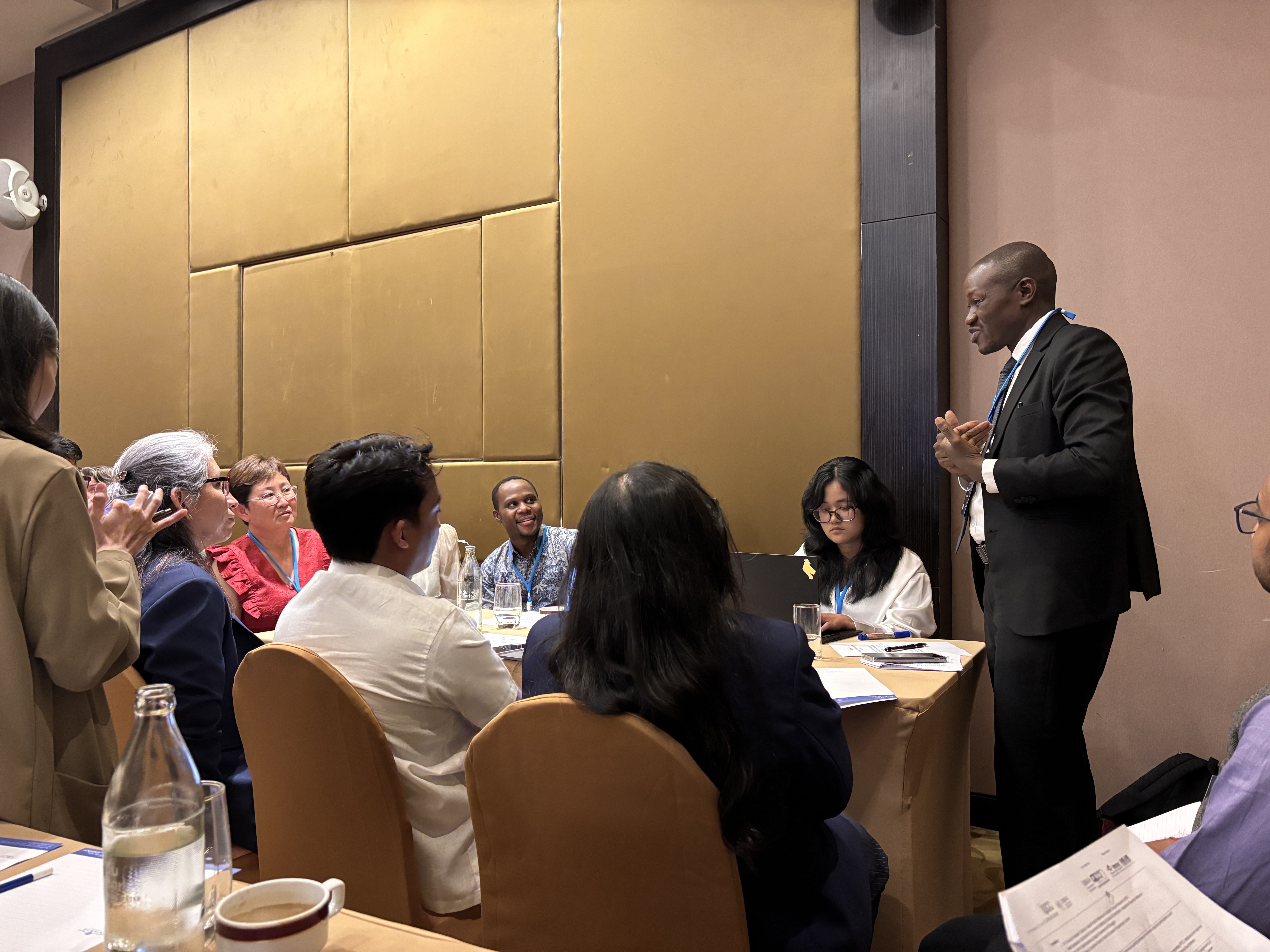
Making the Intergovernmental Panel on Climate Change (IPCC) process more transparent and accessible, especially for the Asia–Pacific region, was the aim behind a one-day IPCC outreach event in Bangkok on 29 March 2026.
More than 100 participants, including policymakers, ministry representatives, long-term researchers, and early career researchers, gathered to gain a deeper understanding of how the IPCC works.
For me, a very early career researcher, the event offered an enlightening look behind the scenes of the reports—and a chance to connect with the people who shape them.
Youth engagement in the IPCC
Throughout the day, we heard from various panels on topics ranging from the IPCC and its science review processes to strengthening outreach among policy and media in the Asia Pacific region. After the panels, a World Café networking session looked at pathways to enhance regional participation and contributions to IPCC assessments over four themes: inclusivity and diversity of knowledge sources; upholding scientific rigour; regional collaboration; and engagement of youth.
Although I would have liked to attend all four sessions, we had to pick just one. As an early career researcher, I chose ‘Session 4: Engagement of Youth and Early Career Researchers in IPCC Processes’. It turned out to be the best decision as it ended up being a highlight of my day.
Session 4 of the World Café was led by Ladislaus Chang’a, one of the IPCC Vice Chairs and was framed around the central question: How can youth and early career researchers meaningfully contribute to IPCC processes?
To explore this, two sub-questions were posed: “What capacity-building support do early career researchers need?” and “What mechanisms can ensure sustained engagement of emerging climate scientists?” Ladislaus got us all to discuss the main questions before the group collectively identified key action points.
The value of early career researchers for the IPCC
Early career researchers can serve as valuable contributors to the IPCC because they often possess in-depth knowledge of emerging technologies, which can prove to be significant to the reports. To further support capacity building among early career researchers, participants agreed on the need to create programs and forums where early career researchers could meet and build lasting connections.
What really stood out to me most was how supportive Ladislaus was in getting us all involved in the IPCC process. He shared his contact details and took immediate action to create a platform where all of us could stay connected. It was decided that a dedicated forum was important to keep the conversation going about meaningful early career researcher involvement. The 45-minute World Café session merely scratched the surface of what could be a much deeper conversation.
ARA’s town hall event
At the Adaptation Research Alliance (ARA) x IPCC Town hall event, the IPCC’s Working Group II Co-Chairs and Vice-Chairs set aside an hour of their time to answer our questions about how to get involved.
One key takeaway from the town hall was the importance of remaining curious about the world around us. Winston Chow, one of the IPCC WG II Co-Chairs, put it simply: “By staying curious and combining curiosity with drive, research starts to move forward and becomes more meaningful in the process.”
Concluding comments
Overall, the entire day’s conversations and discussions lit a fire in me that I didn’t know I had. As someone who has been strictly involved in human geography research, I had never seriously considered the crossover between climate science and human impacts.
However, the genuine encouragement from the IPCC team to involve early career researchers in as many aspects of the IPCC process as possible has proved deeply inspiring. As an early career researcher, I am now more eager to bridge the gap between climate science and human impact while also continuing to stay curious and get involved in the IPCC process with other early career researchers.
Comments
There is no contentYou must be logged in to reply.