Beyond the bubbles: bridging divides for just climate action
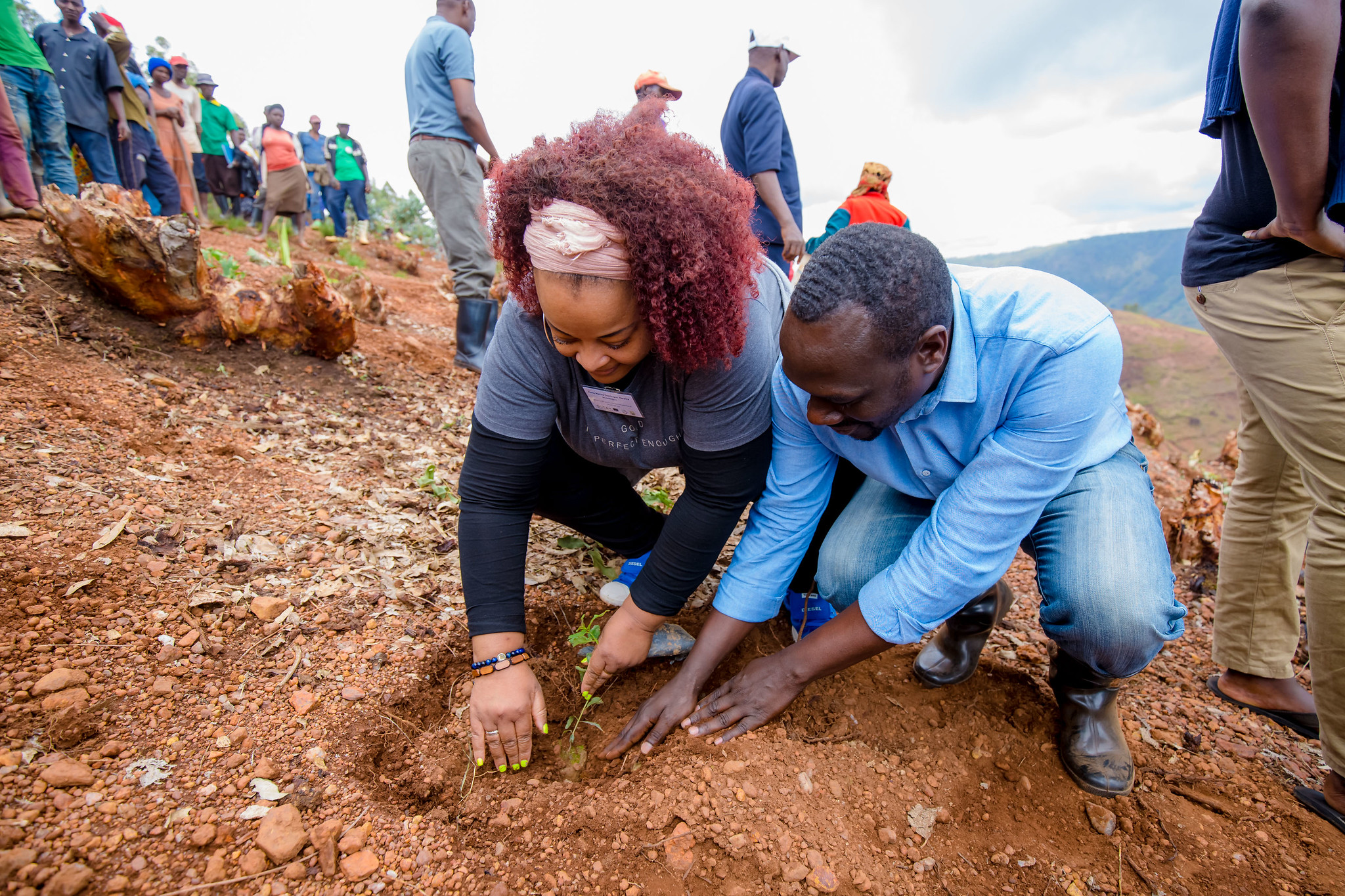
This piece was originally published by Sushila Pandit on the EUIdeas website.
Introduction
Last May, I spent three intensive weeks immersed in three very different arenas of climate discourse. My journey took me from the corporate focus of the Better Society Academy (BSA) in Glasgow to academic deliberations at the EUI Climate Week in Florence, and finally to community-grounded conversations with practitioners at the Community-Based Adaptation (CBA19) conference in Recife, Brazil. While each space offered valuable perspectives, what struck me most was not the diversity of these views but their fragmentation and siloed nature. Despite sharing common goals, businesses, academics, and development practitioners often operate within their own conceptual and linguistic silos, or ‘bubbles.’ This EUIdeas commentary reflects on that experience and explores why co-creating knowledge, reshaping power dynamics, and embedding locally led adaptation (LLA) as a principle — not just a project methodology — are critical for achieving meaningful and just climate action.
From silos to synergy: challenging fragmentation in the climate space
At each conference, the disconnection between sectors was evident. At BSA in Glasgow, entrepreneurs and corporate leaders discussed strategies to localise production and cut out exploitative intermediaries, often echoing themes of economic justice without using the typical Locally Led Adaptation (LLA) terminology (e.g. downward accountability, decolonising finance, devolution of power, and inclusive governance). LLA is an approach to climate action that empowers local communities and organisations to drive adaptation priorities, decision-making, and implementation based on their knowledge, capacities, and needs. Meanwhile, the academic panels at the EUI Climate Week in Florence emphasised geopolitical uncertainty, public policy inertia, and the role of foresight tools in planning for complex futures. In Recife, practitioners at CBA19 focused on inclusive finance, participatory planning, and the lived realities of implementing and championing adaptation across territories.
This ‘bubble effect’ may yield individual success for specific communities or organisations. However, truly transformative adaptation requires stepping beyond our comfort zones and engaging in co-learning and co-advocacy across silos. At the climate week in Florence, one of the speakers mentioned that climate practitioners’ goal should not be to engage with like-minded people, but rather to talk to non-like-minded people. We urgently need to reframe our understanding of collaboration. This is not merely about convening stakeholders in the same room but instead about cultivating a common space where knowledge is respected as plural and shared. The shift in terminology from ‘capacity building’ to ‘capacity exchange’ reflects this emerging ethos. It recognises that every actor brings valuable knowledge. What’s missing is a ‘bridge’ between these domains — a transdisciplinary co-production, where knowledge is not simply shared but jointly produced across boundaries of power and positionality.
Challenging power: the politics of who gets to lead
While the philosophy of LLA has gained support and attraction, the operationalisation of ‘local leadership’ remains challenged. Discussions in Recife illustrated that the key question isn’t just about what communities want; it’s about who holds the power to define what is needed. LLA requires a critical examination of who holds decision-making power, who controls financial flows, and whose knowledge is valued. One participant raised a critical point: “Are we truly supporting local agency or merely prescribing local solutions with new labels?” Ultimately, the crucial question in defining and implementing LLA isn’t who has the knowledge, but rather who has the power to define what counts as knowledge.
The essence of LLA is power rebalancing — not mere decentralisation. Community-led processes must move beyond surface-level participation to tackle structural inequalities. The primary obstacle to LLA lies not in communities’ (lack of) motivation to act, but in the bottlenecks generated by enabling policy environments, donor rigidity, and hegemonies of intermediary organisations. As discussed in Recife, direct financing to grassroots initiatives — ideally ensuring at least 70% of funds reach the community — is critical. Intermediaries, donors, and INGOs must reimagine their roles as facilitators, not gatekeepers. This calls for humility from all actors and a rejection of the false binary between ‘top-down’ and ‘bottom-up’ approaches. The solution is not simply ‘bottom-up’ action, but rather co-creation led by actors at the local level.
Embedding LLA as a value, not just a methodology
For LLA to be truly transformative, it must evolve beyond a project-based framework to become an operational ethos. Much like gender equality and social inclusion (GESI) integration, wherein practitioners cannot claim to be GESI-sensitive in the ‘9-to-5′ workplace and revert to exclusionary practices outside work hours, LLA must become a lived value that permeates every aspect of an organisation’s work.
It’s not sufficient to design participatory activities within a project. Organisations’ mindsets, behaviours, and institutional cultures must embody LLA principles at all levels. We need to ask ourselves: Are we genuinely embodying LLA principles, or merely performing them for reports and log frames? Do our partnerships reflect equitable collaboration, or are they merely subcontracting?
Transformational adaptation is not about ‘managing change’; it is about fundamentally reconfiguring power, finance, and knowledge systems. Transformational adaptation requires us to unlearn, relearn, and listen. As one speaker in Florence noted, “It is not only about putting things on the table, but also about being willing to take some of them off.” The fear of losing power — whether political, financial, or symbolic — often blocks systemic change. A ‘box-ticking’ approach to designing programmes in alignment with LLA principles is not enough. True transformative adaptation demands that we challenge the power hegemony and give agency to those who have been historically deprived of power.
Conclusion: toward a lighter shade of grey
A recurring reflection throughout my journey was the need to unlearn the binary of we (civil society, NGOs, and experts) and they (governments, communities, and private sector actors). As someone trained in advocacy spaces, I was conditioned to believe that civil society held the moral high ground. However, I now recognise how these narratives entrench hierarchy and hinder genuine collaboration. All sectors have vital roles to play. As we advocate for justice, we must reflect critically on our own positionalities and biases.
There is no single solution or perfect model for adaptation. Reflecting on my whirlwind journey across three countries, sectors, and discourses, I realised how entrenched climate practitioners often are in our professional and conceptual bubbles. If we are to realise equitable adaptation, we must embrace discomfort, challenge our assumptions, listen across differences, and invest in co-creating mutual spaces beyond binaries of expert versus community, science versus tradition, or Global North versus Global South. To truly embody the values we champion, we need fewer definitive answers and more courageous questions. Adaptation isn’t black or white — it lives in the grey areas. Our task is to push those shades of grey toward the lighter, more inclusive, and more just end of the spectrum.
Sushila Pandit is associated with all three conferences/workshops referred to in this commentary. She is a Changemaker Fellow at the The Social Hub Talent Foundation – Better Society Academy (BSA), a Policy Leader Fellow at EUI, and an advisor to the programming committee at Community Based Adaptation (CBA19). Sushila has been involved in the programming committee of the CBA conferences for the past five years. She is a climate and resilience professional with extensive experience in climate adaptation, disaster risk management, and building resilience through leading and delivering transformative climate resilience projects and programmes and promoting Global South voices in research.
Further resources
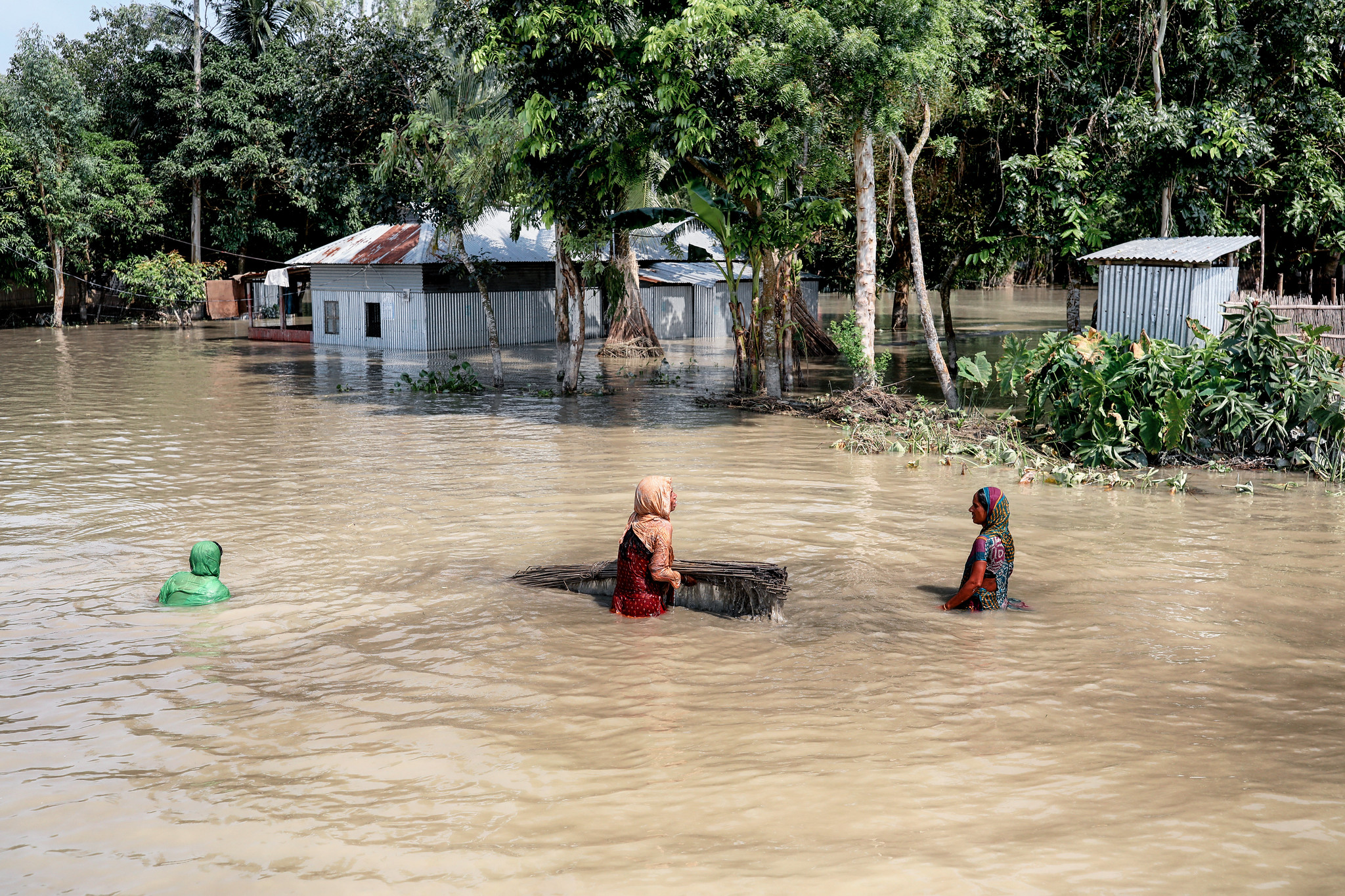

Interview: Why trust, not cash, is key to locally led adaptation




Comments
There is no contentYou must be logged in to reply.