Bridging Science and Action: Reflections from the IPCC Regional Outreach and ARA Townhall


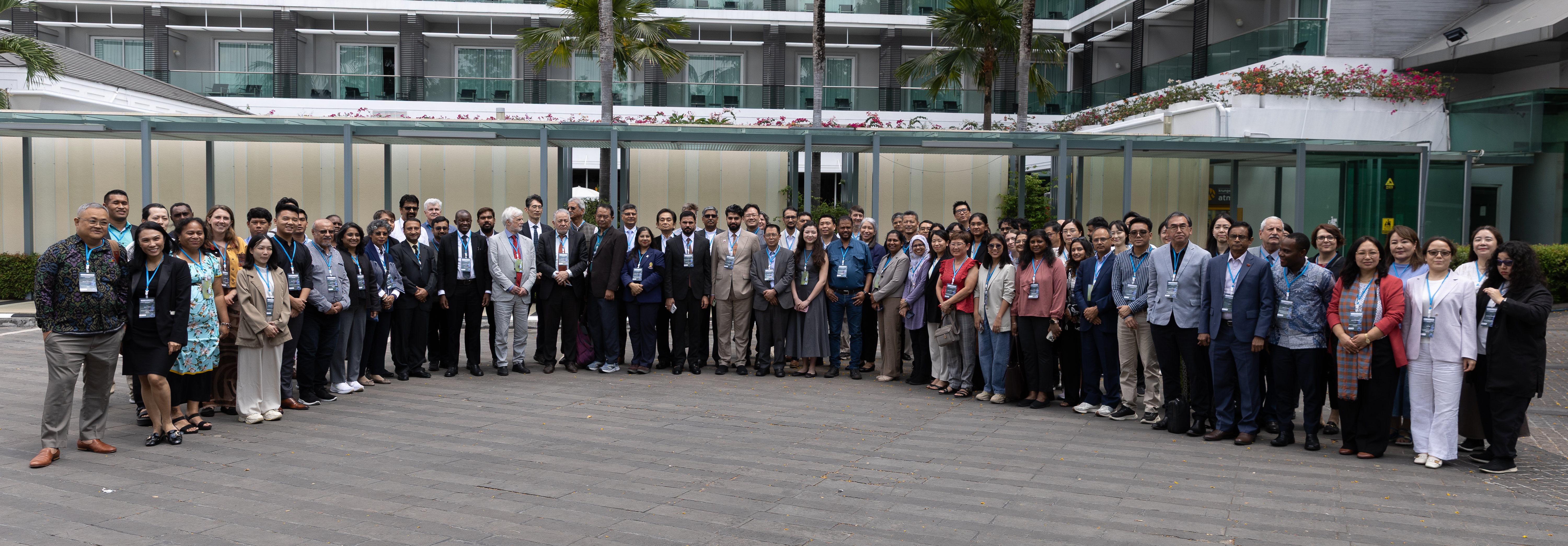
There are moments in one’s academic and professional journey that feel quietly significant: moments when the spaces you enter, the conversations you engage in, and the people you meet come together in ways that reaffirm why you do the work that you do.
My recent participation in the IPCC Regional Outreach for Asia and the South-West Pacific, held in Bangkok on 29 March 2026, was one of those moments.
I had the privilege of attending this event as one of the Emerging Adaptation Professionals (EAPs) of the Adaptation Research Alliance (ARA)’s Knowledge Catalyst Grant Programme.
Carrying that identity into the room felt both humbling and grounding. It reminded me that while our work often feels solitary, writing, analysing, and questioning. We are always part of something larger.
During the outreach, I served as a rapporteur for the session on Effective Engagement with the IPCC. Sitting in that role, listening closely, capturing not just what was said but what was felt between the lines, I was struck by how human the IPCC process really is.
Behind the reports and technical language are real people who are navigating constraints, building relationships, and, in their own ways, trying to make science matter.
Openness and connection among scientists, emerging adaptation professionals (EAPs), and early-career researchers (ECRs)
There was a shared honesty in the room. Many spoke openly about challenges: limited resources, data gaps, and the difficulty of coordinating across institutions. Yet, there was also quiet progress.
Stories of governments strengthening their national mechanisms, of growing participation from underrepresented regions, of young people finding their way into the process. It felt like witnessing something still evolving, still imperfect, but deeply important.
What stayed with me most was the conversation around inclusion, not just in terms of representation, but in recognising whose knowledge counts. The call to meaningfully integrate Indigenous and local knowledge into climate assessments felt especially powerful. This requires deliberate institutional support, such as actively enabling diverse authorship in assessment processes and creating structured spaces for collaboration between scientific experts and Indigenous and local knowledge holders throughout the assessment cycle. It also involves strengthening mechanisms that translate assessment findings into actionable policy insights, including regular briefings for decision-makers and more sustained engagement in policy processes such as COP negotiations, to better connect scientific evidence with lived experiences.
Later that day, I had the privilege of moderating the ARA Townhall on strengthening early-career engagement in the IPCC AR7 cycle. The Working Group II Co-Chairs, Vice Chairs, and Coordinating Lead Author shared their insights on why early-career engagement matters, what priorities EAPs and ECRs should focus on in the coming years, and how they can contribute meaningfully to assessments. The conversation opened up in the Q&A session, where participants engaged directly, creating space for dialogue and clarification. I admit feelings of both excitement and anxiety flowed into me as I stepped into that role. But as the conversation unfolded, that feeling quickly gave way to something else: connection.
Listening to early-career researchers and practitioners share their questions, hopes, and uncertainties felt deeply familiar. Their reflections mirrored many of my own at different points in my journey: wondering where to begin, how to contribute meaningfully, and how to navigate spaces that can sometimes feel overwhelming. And yet, there was also so much clarity in the room, showing how mentorship, access, and intentional support can make all the difference in transforming uncertainty into direction and in helping ECRs and EAPs find their voice and path toward meaningful contribution.
Engaging with the IPCC matters
Having drawn heavily on the IPCC Sixth Assessment Report (AR6) Working Group II report (2022) in my PhD work and publications, this experience felt particularly special. It was a quiet, full-circle moment, moving from being someone who learns from these reports to someone helping create spaces for others to engage with them.
I am deeply grateful to ARA for the trust and opportunity to be part of this experience. It is not something I take lightly. Being in that space, alongside individuals who are equally committed to advancing climate knowledge and action, was both affirming and inspiring.
As I continue to reflect, I carry not just the insights from the discussions but also a renewed sense of purpose. A reminder that the work we do, however small it may seem at times, contributes to something much bigger. That building bridges between scientists and society is not only necessary, but possible.
And perhaps most importantly, that there is space for more voices, especially from our region, from our communities, from those whose stories are still underrepresented.
Ara Joy Pacoma is an environmental social science researcher and science policy practitioner working on the interdisciplinary fields of sustainability, climate adaptation, and governance. She is currently a Science & Technology Fellow at the Philippine Department of Science and Technology (DOST), supporting community-based and policy-relevant initiatives that translate science into action. Ara previously worked as a Research Associate at the Stockholm Environment Institute, focusing on the implementation and implications of ecosystem-based adaptation in Southeast Asia. She holds a PhD in Environment, Development, and Sustainability from Chulalongkorn University in Bangkok, Thailand.
Further resources
Comments
There is no contentYou must be logged in to reply.