Summary
In the Tahirpur upazila of Sunamganj district, flash floods are frequent, threatening wave erosion for the people living on the mounds of Haor. The quasi-experimental action research was conducted to develop nature-based solutions (NbS) for flood wave erosion protection and promote flood-resilient livelihoods during the monsoon.
The study applied longitudinal data collection using a Household Survey (HHS), Focus Group Discussion (FGD), and Key Informant Interview (KII). RS&GIS was applied to monitor river trajectory changes beside the experimental field and track the erosion of the mound. The study also developed a longitudinal database of the inhabitants of the experimental mound to understand the flash floods and wave erosion vulnerability, food security, livelihood, and economic status of the treatment and control participants.
The study found that between 2003 and 2013, the Boulai riverbanks shifted 3.16 meters, and from 2014 to 2023, they shifted 2.9 meters toward the Puberbari area. Between 2003 and 2013 total of 0.033 hectares, and from 2013 to 2023 total of 0.30 hectares of land were eroded in Puber Bari.
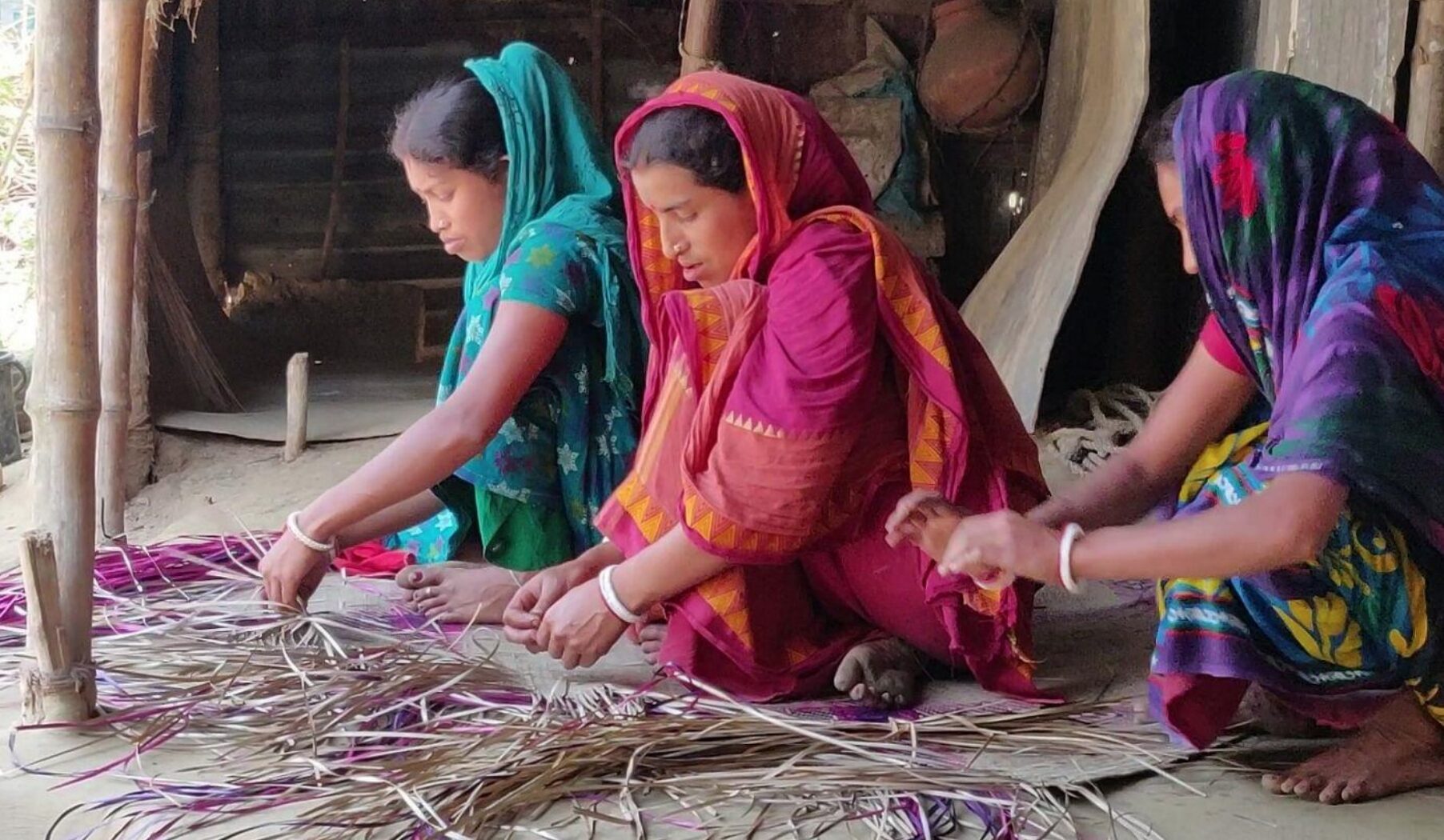
The majority of people have constant access to an adequate food supply during floods. Because of the application of the Nature-based solutions (NbS), in 2023, no erosion or river shifting in the experimental mound. The treatment participants also ensured food security through the production of value-added products from NbS during floods.
Comments
There is no contentYou must be logged in to reply.