Paper: Nature-based solutions for climate adaptation in small island developing states: a systematic review
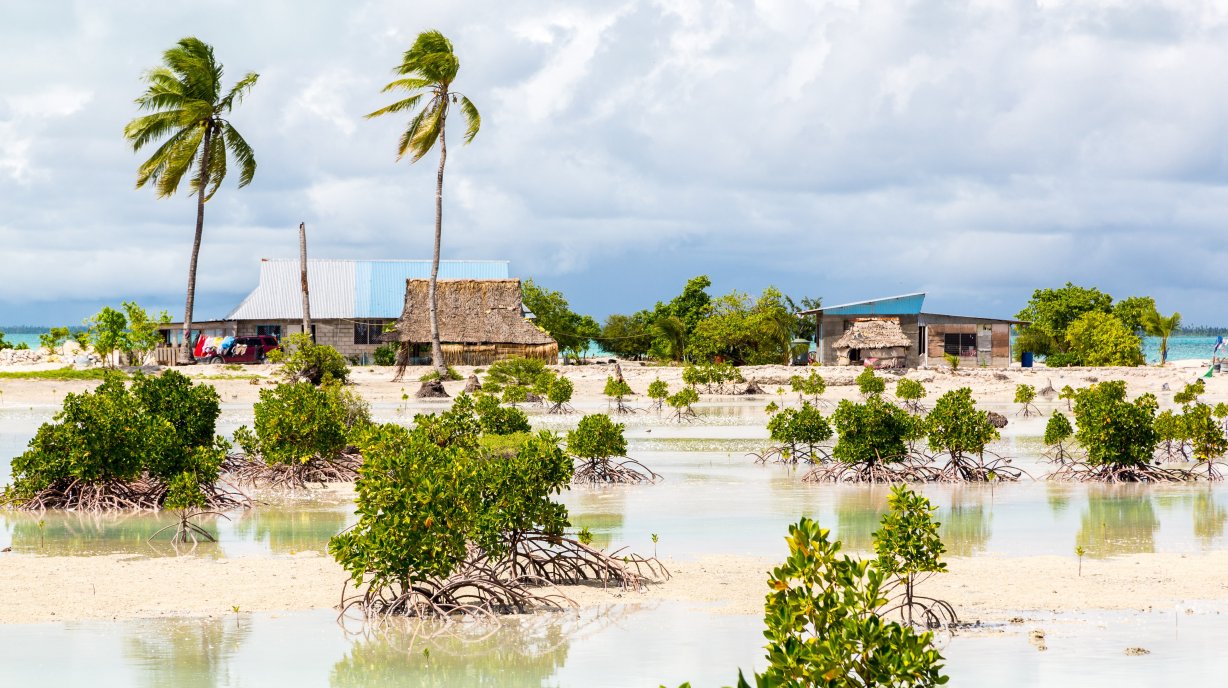
This article is a summary of the original text, which can be accessed here. We highlight some of the publication’s key messages below, but please access the original text for more comprehensive detail, full references, or to quote text.
Introduction
Small Island Developing States (SIDS) are disproportionately affected by climate change, with impacts threatening their communities, ecosystems, and economies. This is due to their limited land availability, geographic isolation, and vulnerability to natural disasters. Nature-based solutions (NbS) offer a promising approach to address these challenges in SIDS; when implemented effectively, NbS are uniquely positioned to provide a “triple win” for climate, biodiversity, and people. These approaches are often more cost-effective than conventional grey infrastructure alternatives and often produce benefits that outweigh the costs required to implement and maintain them.
Given the limited resources of SIDS, NbS hold potential as an affordable strategy to reduce climate risk in these regions, especially those related to coastal threats and food insecurity. Furthermore, the strong dependence of SIDS’ livelihoods and economies on their natural environments highlights the potential of NbS to bridge conservation and development priorities in these regions.
However, the effectiveness of NbS in SIDS remains poorly understood. With SIDS increasingly recognizing NbS in their national plans, the availability of robust scientific evidence to support implementation in island settings is key. Considering this, our study sought to critically evaluate the current state of NbS implementation for climate adaptation in SIDS, identifying patterns and knowledge gaps in understanding NbS effectiveness.
Methodology
We systematically reviewed 49 studies reporting 53 NbS interventions across 26 SIDS, coding intervention types, ecosystems, climate hazards, adaptation effectiveness, broader outcomes (social, ecological, economic, mitigation), and reported socio-ecological resilience mechanisms. This information was used to:
- Assess the current landscape of NbS implementation for human climate adaptation in SIDS;
- Build evidence of the effectiveness of NbS for addressing the impact of climate hazards in SIDS;
- Understand the impact of NbS on broader social, ecological, and economic outcomes; and
- Understand the mechanisms through which NbS contribute to building social-ecological climate resilience.
It is important to acknowledge that our review relied on literature retrieved from academic databases, primarily peer-reviewed and scholarly publications. This approach excluded many NbS projects in SIDS that are not formally published or archived in academic databases.
We also focused on NbS studies framed in terms of human climate adaptation, and published in the English language. These create structural limitations that constrain how fully the review can capture the diversity of NbS practices and knowledge across SIDS. Future reviews on this topic should consider broadening the sources of knowledge included, such as grey literature, non-English publications, and locally produced documents. Diversifying the evidence synthesized may allow for more inclusive representation of Indigenous and local perspectives on NbS outcomes and potentially highlight NbS addressing distinct climate risks that are currently underrepresented in academic literature.
The current landscape of NbS implementation for human climate adaptation in SIDS
While the number of published studies on NbS for climate adaptation is growing, the empirical evidence base remains limited and uneven in SIDS.

Around two-thirds of studies report some evidence of effectiveness. However, many lack baseline data, counterfactuals, and clear descriptions of scale, constraining learning and limiting the ability to scale up NbS in practice. Evidence production is also geographically and institutionally skewed, with research concentrated in a small number of SIDS, and largely shaped by Global North institutions, raising concerns about whose values and priorities define “effectiveness.” Private sector involvement remains limited despite its potential to help address persistent public-sector capacity and financing constraints.
Strengthening NbS implementation in SIDS will require more consistent and transparent reporting, greater support for locally led research, and governance approaches that align long-term adaptation goals with local priorities.

The effectiveness of NbS to reduce the impacts of climate hazards in SIDS
Overall, reported NbS outcomes were largely positive, with 72% of interventions showing benefits and providing evidence that NbS can reduce climate impacts in SIDS, often by addressing multiple hazards and resilience mechanisms at once.

Notably, 21% of interventions delivered “triple win” outcomes for climate adaptation, biodiversity, and societal wellbeing. Much of the evidence focuses on nature-based food-production and agriculture-related climate hazards, offering a pathway for more sustainable food systems in SIDS.

However, few interventions targeted coastal flooding, storm surge, and inundation, despite these being among the most urgent climate risks facing SIDS. These findings highlight the opportunity for NbS to strengthen connections across the ocean–climate–biodiversity nexus in SIDS.
Impact of NbS on broader outcomes and socio-ecological resilience mechanisms
Most NbS interventions reported positive social and ecological outcomes, particularly in strengthening local economic and informational resources and improving ecological indicators such as species diversity and habitat area. However, critical dimensions of socio-ecological resilience were often overlooked.
Equity-related factors, including rights, ownership, and procedural and distributional equity, were rarely addressed, and few studies explicitly targeted poor or marginalized groups. Similarly, ecological outcomes focused on a narrow set of short-term resilience mechanisms, with limited reporting on genetic diversity, landscape heterogeneity, or other factors critical for long-term resilience.
Economic vulnerability was frequently reported to be addressed, yet fewer than half of studies provided explicit evidence of local economic impacts, and formal economic appraisals or comparisons with non-NbS alternatives were rare. While some studies demonstrated strong economic viability and co-benefits, narrow valuation approaches often failed to capture cultural, social, and long-term ecological trade-offs. Furthermore, mitigation outcomes were rarely reported, despite the well-established carbon sequestration potential of NbS, particularly those related to mangroves.
Together, these gaps highlight the need for more holistic and consistent evaluation of NbS that embeds equity, captures a broader range of socio-ecological mechanisms, and assesses outcomes in an integrated way to support long-term resilience in SIDS.
Concluding remarks and recommendations
Given the urgency of climate threats facing SIDS, scaling up resilient adaptation strategies is essential to safeguard both island communities and their biodiversity. As the first review of its kind, this study provides valuable evidence demonstrating the promise of NbS as an effective climate adaptation strategy, with broadly positive social, ecological, and economic outcomes, and potential to provide “triple-win” outcomes and synergies across the ocean-climate-biodiversity nexus.
Our evidence shows that NbS have potential to address critical threats facing SIDS globally, including coastal risks, economic instability, and food insecurity. At the same time, NbS are not a one-size-fits-all solution for climate adaptation in SIDS. They need to be designed around the specific climate risks, priorities, and knowledge systems of each nation, island, and community. Even island communities facing similar threats may pursue different strategies based on cultural context, local knowledge, and lived experiences.
However, significant gaps in supporting NbS implementation in SIDS remain. To improve understanding of NbS as climate adaptation strategies in SIDS, this study identifies key future research priorities:
- Stronger representation of under-studied SIDS contexts
- Greater focus on coastal and ocean-related NbS
- Evidence linked to baselines and counterfactuals
- Holistic, long-term monitoring and evaluation
- National and regional-scale synthesis of grey literature
- Integration of equity and knowledge pluralism in NbS design and evaluation
Addressing these gaps will strengthen scientific understanding of NbS and support evidence-based decision-making regarding NbS among policymakers, helping to advance effective and locally relevant climate adaptation policy and planning at scale in SIDS.
Suggested citation
Brown Z, Kendall K, O’Donnell E, Tavasi L and Seddon N (2026) Nature-based solutions for climate adaptation in small island developing states: a systematic review. Front. Environ. Sci. 13:1706713. doi: 10.3389/fenvs.2025.1706713
Further resources


Advancing gender-responsive and socially inclusive practices in Nature-based Solutions for adaptation
Traditional ecological knowledge for climate change adaptation and disaster risk reduction in Fiji


(1) Comment
Dear Dr Brown and co-authors. I just wanted to personally thank you for undertaking this review, which is extremely useful for our work with SIDS in the Caribbean. In fact! I can share with you that we are just starting a new project with SEI focused on building training materials on NbS for 5 Caribbean nations, and that the findings of your work will be used as part of our content. In particular, the case studies from Cuba and Dominican republic are massively helpful.
I also found very insightful your reflections on the predominance of publications from outside the SIDS.
Do you see any specific avenues to increase publications and research from SIDS?
Best wishes