Brief: Fostering complementarity: how development and climate financiers can scale up locally led adaptation
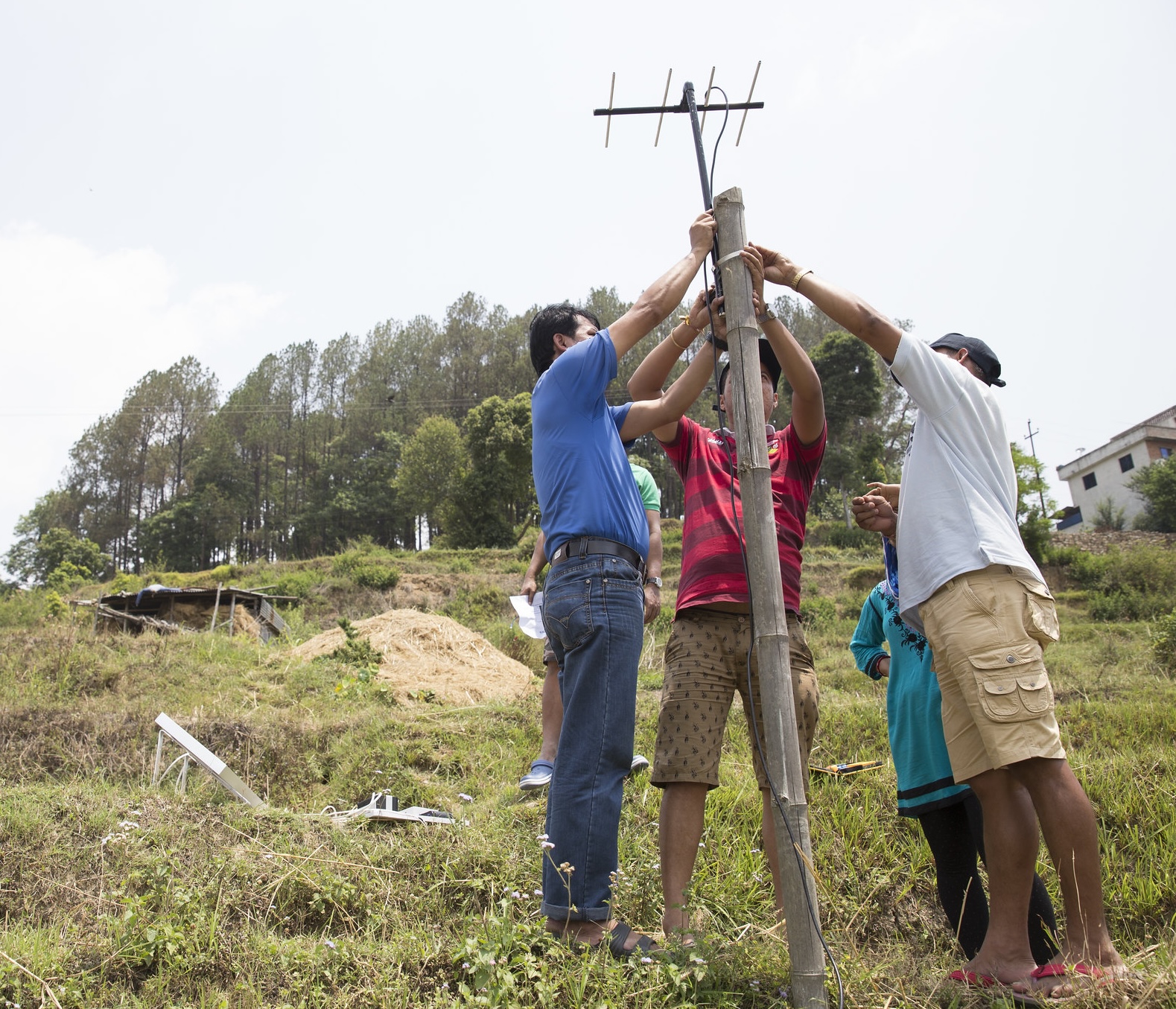
This article is an abridged version of the original text, which can be downloaded from the right-hand column. Please access the original text for more detail, research purposes, full references, or to quote text.
Key messages
- A locally led adaptation (LLA) approach is an essential tool that, if scaled up, could deliver development and climate co-benefits for vulnerable and disadvantaged communities.
- Financiers bring varied approaches to LLA based on their operational mandates; therefore, they play different roles in supporting and scaling up the LLA agenda.
- Now is an important moment to strengthen complementarity in the efforts of financiers, governments and other actors to reach those at highest risk, as new opportunities emerge from the evolving climate and development finance landscape.
Introduction
Support for locally led adaptation (LLA) has grown since the Global Commission on Adaptation established the LLA Principles in 2021, yet scaling the agenda remains challenging. Originating from civil society, these principles aim to shift climate finance from top-down approaches toward devolving decision-making power and distributing resources to local actors.
LLA is already applied to small-scale adaptation efforts—such as community-managed water harvesting or climate-smart agriculture—but can also operate at larger scales, as seen in the Asian Development Bank’s Community Resilience Partnership Program (CRPP) and the World Bank–funded Financing Locally Led Climate Action (FLLoCA) project in Kenya.
Despite growing funding, financiers face barriers to operationalizing LLA at scale, including misconceptions that LLA is always small-scale, limited demand from some governments, and gaps in technical capacity. Currently, less than a quarter of international public adaptation finance specifically targets local communities. Increasing pressure on financiers to deliver efficient official development assistance (ODA) and reach vulnerable populations presents an opportunity to maximize LLA’s impact by achieving both climate and development outcomes.
This brief is intended to inform adaptation financiers, as well as the broader community of adaptation scholars and practitioners, in their efforts to scale up support for LLA.
Convergence of opportunities
Climate and development financiers recognize the urgent need to support adaptation among the world’s most vulnerable communities, in alignment with the Global Goal on Adaptation’s emphasis on protecting those at greatest risk. The Global Goal on Adaptation provides a critical framework for reflecting local priorities, channelling resources toward the most vulnerable and disadvantaged populations, and building their resilience to escalating climate risks.
Currently, 1.2 billion people face high climate-related risks, often living in fragile contexts, poverty, or without access to basic services (World Bank, 2024b). Climate change could push an additional 132 million people into poverty by 2030.
ODA reductions by major donors create challenges but also opportunities: improving coordination and quality of finance for LLA, maximizing co-benefits, and stretching resources to reach those at highest risk. Innovative financing mechanisms and partnerships at local and national levels are essential to leverage expertise, local knowledge, and good governance. Effective LLA interventions embed long-term capacity, institutional change, and reinvestable returns.
Proven track records
LLA can build on the legacy of locally led development initiatives. Such initiatives have already shown that devolving finance to local levels builds lasting institutional structures and processes and improves ownership, transparency and efficiency. In this space, community and local development (CLD) approaches emphasize community control over planning decisions and investment resources. CLD approaches improve access to quality infrastructure and services, especially in fragile contexts such as the Horn of Africa and the Sahel. Long-term engagement, monitoring, and flexible implementation are key to success.
Countries like Indonesia and the Philippines have institutionalized CLD approaches, highlighting the importance of local ownership. LLA adapts these lessons to climate-specific needs, integrating local solutions within national policies.
Maximizing dividends
LLA can maximize climate finance effectiveness by enabling more rapid, inclusive and resilient development, as well as delivering targeted adaptation outcomes for the world’s most vulnerable communities. LLA offers “double dividends”: direct climate resilience benefits (e.g., disaster preparedness, climate-smart infrastructure) and broader social and economic gains, including jobs, skills, food security, health, gender equality, local governance, and social cohesion. This multiplier effect makes climate finance more impactful and lays the foundation for long-term resilience.
LLA is not a panacea. It must complement broader adaptation strategies, consider political and economic contexts, and integrate with regional and national planning. LLA approaches vary by country context, inequality, institutional capacity, and climate risk. Macro-level risks, such as supply chain disruptions, require complementary approaches.
Fostering complementarity among financiers
Though financiers share a common objective to deliver more finance to vulnerable communities, they bring different approaches and face different challenges and constraints. However, they differ in scale, funding models, and approaches. Bilateral donors and vertical climate funds often provide grants directly to civil society, while multilateral development banks (MDBs) and some bilateral funders channel concessional financing through governments. Private sector actors and philanthropies are emerging but underutilized players.
Given their differing approaches, financiers have an opportunity to cooperate and build on their relative strengths in supporting and scaling up LLA:
- Bilateral financiers can build on close government-to-government relations through grant financing, concessional loans, and development of proof-of-concept financing models.
- Vertical climate funds can target interventions to the most vulnerable contexts and innovate approaches.
- MDBs can scale up and integrate successful models into national systems, while wielding broader policy influence and reforms through financial instruments.
- Public development banks can leverage financial resources and technical expertise to bridge gaps between governments and communities.
- Private sector actors can contribute to blended finance approaches and support local financial institutions for sustainable outcomes.
- Philanthropies can enable flexibility and experimentation with innovative approaches.
Recipient governments are crucial for scaling LLA, combining financing types, mainstreaming LLA into national systems, and enhancing cross-ministerial coordination.
Private sector engagement requires strengthening local financial ecosystems, particularly microfinance institutions, and developing climate-sensitive financial instruments (insurance, guarantees, results-based payments). Public-private partnerships can attract private investment while protecting community interests. MDBs and bilateral funders can facilitate these partnerships, offering technical assistance and capacity building to ensure bankable, sustainable projects.
Building momentum through evidence, results and learning
Robust evidence of impact and efficiency is crucial to continue to build the case for LLA among governments and financiers. A clear body of evidence demonstrates that LLA leads to improvements in equity, transparency, and legitimacy of adaptation interventions. Research should assess long-term resilience benefits, efficiency compared to top-down approaches, and economic returns. Mixed-method evaluations—including program evaluations, randomized control trials, and economic analyses—can strengthen the business case.
Understanding LLA’s “double dividends,” complementarity, and scalability requires comparing results across contexts and governance levels. Exchange visits, case studies, and joint learning platforms between financiers and governments will enhance understanding and replicability.
The private sector’s growing role raises questions about maintaining focus on vulnerable communities. Blended finance and microfinance offer potential but remain small-scale, and concerns persist about debt vulnerability and alignment with LLA principles (Global Environment Facility, 2024).
Continuing the conversation
As evidenced by the discussion in the symposium on which this brief is based, financiers have begun to identify their common objectives and approaches to supporting LLA, as well as how they diverge. Common objectives include ensuring that adaptation financing reaches the most vulnerable populations, supporting capacity building at the national and local levels, and ensuring national systems are built or strengthened to sustain LLA. Yet divergences remain regarding how different financiers approach and provide support for LLA. Some institutions prioritize direct funding to local organizations, while others prefer working through intermediary organizations or government channels, making complementarity essential to avoid duplication.
The path forward requires sustained efforts to build trust among these diverse financial actors through regular dialogue, shared learning platforms, and joint initiatives that demonstrate the value of coordinated approaches. Such candid exchanges are essential for identifying opportunities for complementarity, where different financiers can leverage their unique strengths and capabilities to create the enabling environment for LLA scalability and replicability.
Beyond inter-financier coordination, the successful scale-up of LLA depends on robust mechanisms for dialogue and partnership with the broader ecosystem of stakeholders championing the agenda. Local-level organizations and civil society – including institutions such as the Global Center on Adaptation, the International Institute for Environment and Development, and the World Resources Institute – have played a pioneering role in advancing LLA. Several funders have developed their own approaches for scaling up the agenda by learning and building on this foundation, in consultation and partnership with these stakeholders (Coger et al., 2022). Such dialogue and collaboration will continue to be essential for bringing LLA to scale.
Suggested citation
Browne, K., El-Horr, J., Parviainen, J., & Tenzing, J. (2025). Fostering complementarity: how development and climate financiers can scale up locally led adaptation. SEI brief. Stockholm Environment Institute. https://doi.org/10.51414/sei2025.041
Further resources


Enabling and financing locally-led adaptation (LLA)


Comments
There is no contentYou must be logged in to reply.