Resilient cities, resilient futures: taking urban lessons from CBA19 to COP30
This piece was originally published on the IIED website.
rban voices rang out loud and clear at this year’s CBA. Sessions within the dedicated urban track tackled the event’s overarching question: “how can we achieve just and equitable adaptation?”
Topics explored included:
- How urban agroecology can support social, climate and food justice
- Housing justice as a pathway to climate justice
- Equitable finance mechanisms for the urban poor
- Inclusive disaster risk reduction
- The role of government in building fair and resilient cities
- The role of urban bicycling and climate memory circles in favelas, and
- Coalitions for inclusive climate action through urban labs and youth-led climate planning.
Urban voices at CBA19
Brazil provided a particularly powerful backdrop for discussing urban resilience: with over 86% of people living in cities, it is predominantly the urban population that faces escalating climate risks.
Multilingual live interpretation (an ambitious undertaking! – and a first for CBA) helped facilitate several Brazil-focused urban sessions and enabled strong grassroots participation, fostering rich and meaningful dialogue.
The dialogue created space for both peer-to-peer exchange and direct engagement with decision-makers. In one session, participants shared their lived experiences of intersecting layers of discrimination, leading to an emotional exchange that underscores the universality of the challenges they face. In another, community members engaged directly with government representatives from the state of Pernambuco.
Urban communities inspire action
The worsening impacts of climate change affect Brazil’s urban population at large. But it is arguably residents of favelas and disadvantaged urban communities who are hit hardest.
Physical, social and legal factors abound: precarious location, inadequate infrastructure and housing, social exclusion, and the ongoing threat of eviction are day-to-day realities.
Climate adaptation in favelas and informal settlements requires community-led, context-specific approaches, as one host illustrated in a session on inclusive disaster risk reduction:
“[y]ou need barely any rain for people living right by the river [in favelas] to get horribly affected, so it’s so important that they know how to read [their own] river-level monitors. Because by the time a government-issued orange alert goes out, they’re already flooded… [This is why] communities need to be a part of defining what risk means to them in their community”
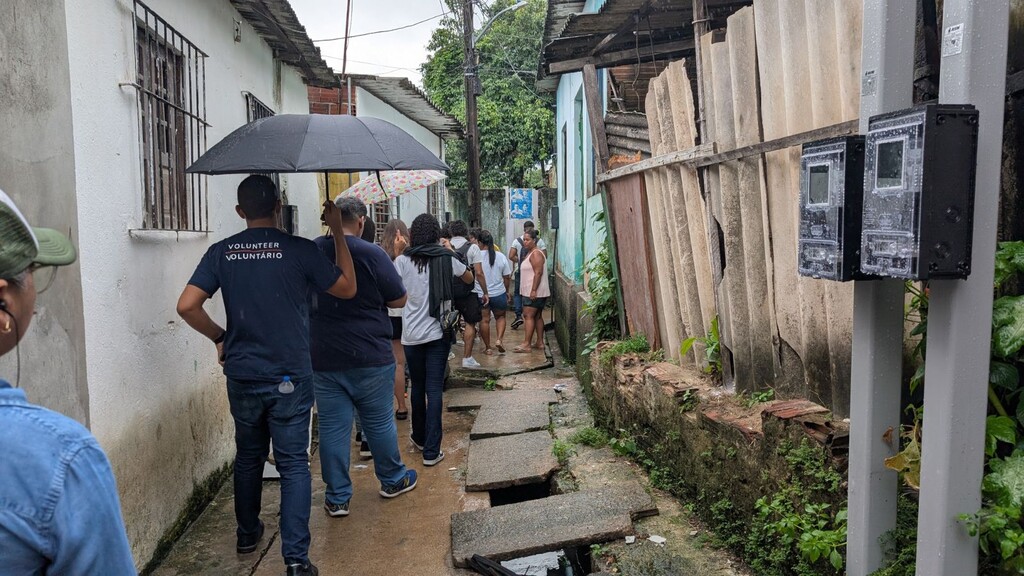
CBA19 also highlighted inspiring climate adaptation projects that are being led by urban communities. Field visits showcased examples of urban climate action under way in Pernambuco state including:
- Women-led flood response planning in the Vila Arraes floodplain where a community-led contingency and adaptation plan seeks to address the effects of heavy rains through disaster preparedness and climate adaptation
- Architectural and behavioural adaptations to floods and landslides in the community of Coqueiral where residents have developed community-led strategies for flood adaptation, and
- Green spaces for nutrition and climate mitigation in Peixinhos favela in northern Recife, where an urban agriculture project driven by Black women focuses on agroecological food production, food sovereignty and female empowerment.
These initiatives show that urban communities are not passive recipients of climate impacts – they are proactive agents of change with vital knowledge and solution-focused strategies that must be recognised and scaled up.
COP30 planning: where are the urban voices?
Later this year, Brazil’s northern city of Belém will host the UN global climate summit (COP30).
Planning is well underway. Last month, the COP presidency released its fourth official letter which set out 30 key priorities for COP30. ‘Resilient urban development’ is among these priorities.
The inclusion of urban is unsurprising given Brazil’s long-standing policy leadership around urbanisation and vulnerability. However, ‘resilient urban development’ is only one priority from a very long list. The climate risks that cities face is overwhelming, but it remains unclear how prominently cities and urban issues will actually feature on the summit’s agenda.
Insights from CBA19
CBA19 offered important insights and innovative solutions on how locally led action can help urban spaces not only adapt to climate change, but to recover and thrive. These insights must inform the summit’s discussions on resilient urban development, particularly the urban applications in some of CBA19’s key messages.
These include:
- Prioritising equity and inclusion in urban planning and policy by dismantling systemic discrimination and spatial inequalities
- Securing tenure rights for equitable and just adaptation and resilience, and
- Acknowledging that climate risk is socially constructed and shaped by discrimination, governance and inequitable access to resources and services.
A call to action: taking community insights to COP30
At COP30, people from urban communities, peripheries and favelas must not only be visible but actively included in global climate decision-making.
Many of the people driving locally led adaptation initiatives in Brazilian cities and other urban areas from across the global South will not be present. But their voices, insights and experiences must feed into the agenda.
That means creating mechanisms for real, ongoing exchange and collaboration between communities and policymakers. It also means recognising the vital role of flexible, accessible finance that reaches local communities directly.
Urban adaptation to climate change is not only a technical challenge – it is a question of justice. As CBA19 made clear, communities are not waiting; they are leading the way. The world must follow their lead.
Further resources


Comments
There is no contentYou must be logged in to reply.