Investigating the impact of climate change induced drinking water salinity on pregnancy outcome in Bangladesh



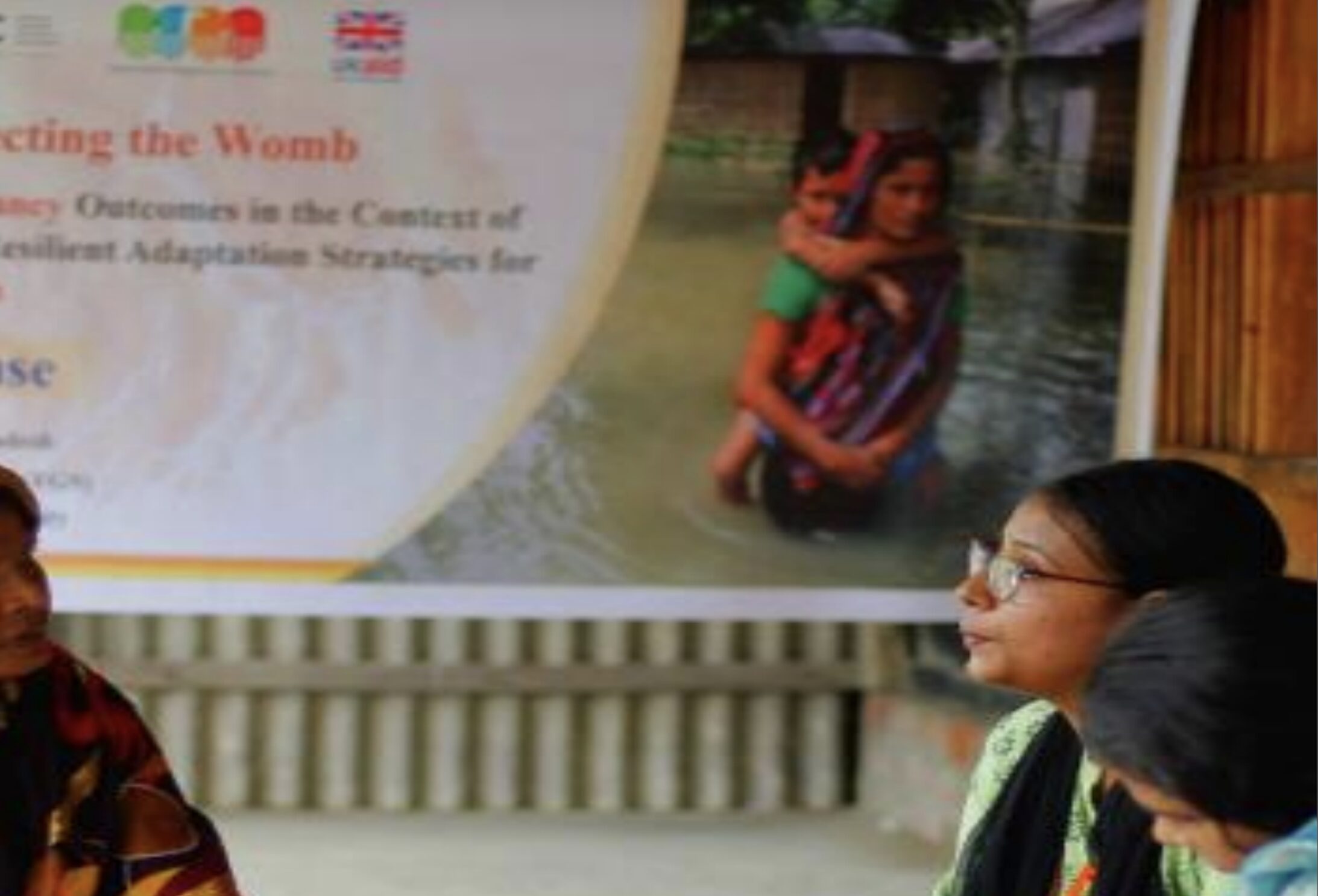
Summary
This report by the Institute of Sustainable Innovation for Communities (ISIC), in collaboration with Daffodil International University and the Adaptation Research Alliance (ARA), presents findings on the impact of climate change-induced drinking water salinity on pregnancy outcomes in coastal Bangladesh. It focuses on Bagerhat and Shatkhira districts, where saline intrusion affects drinking water sources, and compares them with non-saline areas in Tangail. The study includes 270 women of reproductive age, with 151 exposed to saline water. The findings show no statistically significant association between salinity and adverse pregnancy outcomes such as abortion, stillbirth, or neonatal death. However, pregnancy complications were significantly higher in saline areas, with 31.1% reporting complications compared to 11.8% in non-saline areas. The report identifies preeclampsia as significantly associated with saline exposure, while eclampsia showed no statistical significance. It highlights the need for further research and interventions to address maternal health risks linked to drinking water salinity.
Comments
There is no contentYou must be logged in to reply.